- Home
- Contact Us
- Rallies>
- _Member Online Forms
- _What is a Rally?
- _Rally Ready Guidebook
- _Rally Days
- _Rally Timetable
- _Gear Check
- _Safety
- _No Smoking or Alcohol
- _No Dogs
- _Extreme Weather
- _Rally Special Guests
- About Us>
- _Who are we?
- _Our Coaches
- _Our Values
- _Our Grounds
- _Where do we fit in?
- History>
- _Our Beginings
- _First Newsletter
- _Club Award of Merit Recipients
- _Club Award Recipients
- _Club Life Members
- _40th Anniversary Celebrations
- _50 Years with PCV
- Resources
- Membership>
- _Why Join Pony Club
- _Come & Try (Own Horse)
- _Riding Memberships (Own Horse)
- _Club Supporter Memberships (Parents)
- _Membership Fees
- _Membership Cards
- _Club Uniform
- _WWCC
- _Direct Deposit Details
- Join Us
- Sponsors
- Gallery
- Articles
Welcome to Melton & District Pony Club...
Come & Try Day
Please make sure you have a read through the information on the Come & Try page (via Membership tab) or click on the image above.
Procedures for purchasing a Come & Try Day "membership" have changed and must now be purchased directly from PCV rather than at club level.
I Want a Pony (Part 3)
It’s time for the purchase...
Checklist:
- You can provide all basic health and welfare requirements to keep a horse happy and healthy.
- You have adequate time to fully commit to a horse and all the care it requires!
- You have enough money to provide for the care a horse needs?
- You have a suitable property/agistment facility lined up to keep a horse on?
- You know what equipment and supplies you need to care for a horse.
- You know what type of horse you want.
A couple of tips...
- Prior to purchase, arrange an examination of the horse/pony with a reputable vet that you have organised - do not take a sellers word as to the suitability or soundness of a horse as there may be underlying problems which have brought about the sale. While a vet check can be expensive, it may save you from buying a horse that is unhealthy, lame or otherwise unsuitable.
Take a trusted horse expert with you to assist in selecting a suitable horse. - Arrange a trial period (if possible) before committing to a purchase - this will allow you to find out if the horse is suited to you.
- Check out this recent article by Equus Magazine on “8 Rules for Buying a Horse”
Alternatives to Horse Ownership...
- If you’ve crunched the numbers and decided owning a horse isn’t within your budget at the moment, you can...
- Take riding lessons at a facility that offers the use of their own school horses.
- Lease a horse/pony - many owners offer their horses/ponies for lease to keep the horse in shape when the owner themselves is unable to ride. Leasing offers the owner an opportunity to offset ownership costs while ensure their horse get all the love and attention they deserve.
- Volunteer your time at a rescue center, riding center, stables etc. You’ll learn vital skills that will help you when you do eventually purchase your own horse.
Final notes...
- Horse riding is great exercise
- Horse riding gives you the chance to get outside
- Horse riding is a social activity
- Horse riding helps you build a relationship with your horse whilst taking some time out
- Horse riding teaches important life lessons and skills
- Horse riding teaches you to care for your horse
- Horses are wonderful companions
- Horses require daily care
- Horse Welfare and safety should ALWAYS be your TOP PRIORITY
- View the PCA Horse Welfare Policy HERE
I Want a Pony (Part 2)
Do I have the time required to fully care for a horse?
- As an absolute minimum horses should be attended to on a daily basis - twice daily is recommended. Daily tasks include...
- Morning and evening feeding.
- Morning and evening rugging/un-rugging - rugging appropriately. Warm days with cold nights may require rug changes in the morning and at night.
- Cleaning out stall/shelter to prevent thrush and other hoof problems.
- Inspection of hooves for any damage and cleaning.
- Keeping an eye on the horses appearance and being on the lookout for any wounds or other physical indicators that something isn’t right.
- In the warmer months, checking the horse for Bot fly eggs - removing and treating if present.
- Grooming the horse.
- Exercising the horse - whether riding, lunging or being turned out for the day.
- Additional weekly horse care...
- Cleaning out and refilling of water trough.
- Removing manure from the horse paddock/pasture if kept on a small plot of land.
- Inspect the property/paddock/pasture where your horse is kept, looking for damage to fences or anything that may cause the horse any harm.
- Check food supply to ensure there is enough for the week - order or pick-up more if running low.
- Other recurring care requirements...
- Having the horses hooves trimmed every six to eight weeks. If it wear shoes, these should also be replaced.
- Treating the horse for worms every two to three months.
- Having the horses teeth floated on an annual basis. Depending upon the horse, it may require more frequent floating.
- Ensuring the horse has it’s recommended vaccinations to help keep it safe from equine illnesses. Vaccinations differ from area to area, so check with a local vet to determine which are recommended for where your horse is kept. Regardless of location, two routine vaccinations to consider are tetanus and strangles.
- Organising a general health exam from a veterinarian each year is recommended.
- Cleaning of equipment, tack, saddles etc.
Do I have the money to fully care for a horse?
- Aside from the initial purchase, horses require a regular financial commitment in order to care for them properly and keep them healthy. These can include...
- Board/agistment fees if you don’t have your own property.
- Feed - hay, grain, supplements etc.
- Routine farrier and dental services
- Routine worming/medication
- Routine vaccinations & vet checks
- Emergency veterinary services
- Remedial therapies/muscle treatment/massage etc. If the horse is suffering lameness, soreness etc.
- Additionally there are expenses associated with the following...
- The horse:
- Tack - the bare minimum you need for your horse includes: a halter and lead rope, saddle, bit, bridle, saddle pad, girth/cinch, stirrups, and stirrup leathers,
- Having the horses saddle professionally fitted for the comfort and safety or horse and rider.
- Rugs,
- Grooming gear,
- First aid supplies etc.
- The rider:
- Standards approved helmet and safety vest,
- Riding clothes & boots
- You may also want to...
- Undertake regular riding lessons
- Join a club
- Enter competitions
- Purchase a horse float to transport your horse to lessons, competitions etc. Expenses related to this would also include registration, insurance, fuel etc.
- Insure your horse - the various types of insurance you can buy include major medical, surgical, full mortality, limited mortality, loss of use, and personal liability. Some even offer colic-specific coverage.
I Want a Pony (Part 1)
Buying a horse is a big investment of time and money, you need to consider the following before purchasing one.
- Is your property/agistment facility close to home so that you can attend to your horse daily - preferably twice daily?
- Do you have enough pasture (or access to pasture) and enough money to feed a horse if the pasture becomes inadequate?
- Can you afford to purchase tack and gear for a horse?
- Can you afford regular farrier expenses, dentist fees, veterinary fees, worming products?
- Do you have enough time to adequately care for a horse.
So you’ve decided you want to purchase a horse/pony.
Where will I keep it?
- Horses require large amounts of space, so research your options.
- Do you have your own property?
- Does it have adequate space? At least 1-2 acres per horse.
- Does it have adequate fencing to keep a horse safe?
- Does it have adequate shelter so it can escape the weather?
- Maybe you’re looking at a boarding facility? Boarding facilities offer a variety of options
- Full Care: the horse will have a pasture and stable with staff seeing to all of it’s needs.
- Pasture Care: the horse will have a pasture and staff will see to it’s daily needs.
- Pasture Only: the horse will have a shared or private pasture/paddock with you attending to it daily (preferably twice daily) and taking care of all of it’s needs.
- Remember horses are designed to be moving and grazing all day, constant movement is crucial to good circulation and health.
How will I feed it?
- Inadequate food and water can lead to a number of negative health conditions like malnutrition and dehydration.
- On average, horses need to eat 1.5 to 2% of their body weight per day. This means that a horse that weighs 500kg will need around 7.5 to 10kg. Most of this should come from forage like grass and hay.
- It is important that your horse has a well-balanced healthy diet that meets the needs of their lifestyle and physical characteristics. Some food sources that can play a role in sustaining your horses needs are...
- Grass: In the wild a horse’s diet largely consists of grass and other forage. A horse is designed to be able to eat and digest grass easily and be able to extract nutrients and sugars that grass produces. Free and easy access to grass enables horses to graze for hours at a time.
- Hay: If adequate grass supply is not available to your horse, you can feed hay. Hay is grass that has been dried, baled and stored and still provides much of the natural sugars and nutrients that grass does.
- Grain: Grain can be used to provide your horse’s diet with extra sugars and nutrients that can help your horse hold it’s weight or produce more energy if it’s ridden often. However, grain should not be the main aspect of your horse’s diet as it has extra sugars unnatural to your horse that can lead to obesity and hoof problems.
- Supplements: Supplements are minerals, vitamins and nutrients that you can add to your horse’s diet to help improve their health and balance their body systems. IF your horse seems to be lacking in one area of it’s health, you should research how certain supplements may be able to help them.
- Water: This is essential for your horse’s circulation, digestion, body temperature regulation and energy production. A single horse needs anywhere from 20-50 litres of water a day. Clean fresh water is vital to your horses’ survival. Horses an dehydrate quickly if water is too hot to drink, dirty or unavailable. Horses that aren’t getting enough water are at a greater risk of colic from indigestion or impaction.
- Pony Club Australia suggests 7 rules to make feeding your horse simple...
- Give your horse 24/7 access to roughage/forage (hay, chaff, pasture - although pasture access may need to be restricted in horses and ponies that are too forward in condition).
- Avoid high sugar/starch feeds
- Good quality protein
- Feed oil
- Feed Vitamin E
- Feed Biotin
- Know supplements can cause problems
Final Checklist
- Is your horse safe around not just cars, but also heavy vehicles, motorbikes, bicycles, joggers, prams, dogs, and other wildlife? Consider all possible hazards before venturing out on to the roads?
- Have you chosen a safe route?
- Have you checked all of your tack to make sure it is in good repair and strong? You do not want to be riding on a busy road and have tack failure.
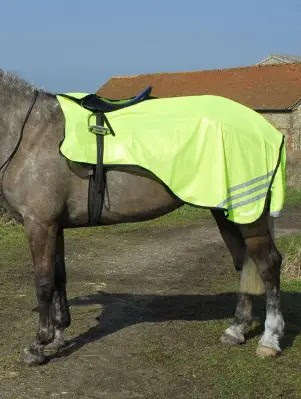
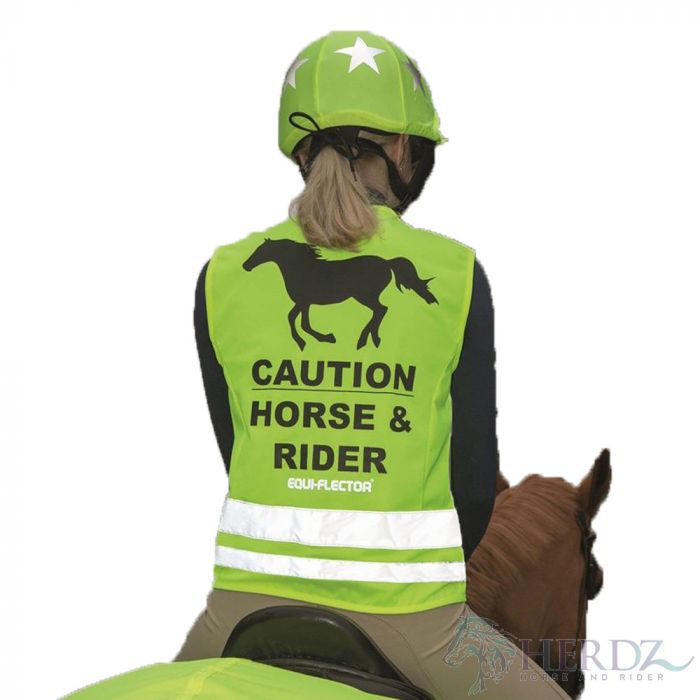
- Are you and your horse wearing reflective clothing? Even during the middle of the day, Hi-Viz clothing helps you to be seen more easily.
- Are you wearing an approved Australian Standards riding helmet?
- Are you carrying a phone with you, not in a saddle bag, in case you are separated from your horse? Remember it is against the law to use your phone whilst riding.
- Have you familiarised yourself with the road rules to make sure you follow the guidance on how you should behave on the road and interact with other road users?
- Are you carrying anything with you to remove manure from the road?
- Know the road rules e.g. how to negotiate an intersection and roundabout
- Know your hand signals
- Practice hand signal to turn left, right, stop and slow down
- Practice turning left, right and halt and stand (you need to be able to do this holding the reins in one hand)
- Practice riding past hazards you are likely to encounter, e.g. rubbish bin, dog, pram
- Practice riding over different ground surfaces similar to what you may encounter
- Practice negotiating trail obstacles you are likely to encounter e.g. step-overs, gates
- Practice riding in pairs or as a group (if required for your situation)
- Practice halting and standing as though you are checking for traffic
- Practice an emergency dismount from both sides of the horse
- Practice leading your horse from both sides
- Practice attending an incident such as a fallen rider, e.g. check for hazards, dismounting, holding other horses, calling for emergency services, first aid.
- Relaxed, comfortable with Personal Protective Equipment and Hi-Viz horse and rider equipment
- Remains relaxed while the rider mounts and dismounts, and practices hand signals
- Parks (stands still) in quiet spaces or alongside roads
- Obedient with frequent transitions between halt, walk and trot, including in pairs or a group
- Obedient when walking around hazards such as parked cars or past new objects
- Obedient when ridden across a range of surface types and colours, e.g. light, smooth cement or darker road surface with white markings or water running in street gutters
- Obedient when ridden past a variety of road-related infrastructure, e.g. signage, road works
- Obedient when negotiating a range of road and trail obstacles common to your local area.
FINAL TIPS:
- Do not ride a horse on roads if you cannot control it in an enclosed area first. Make sure you are a competent and confident rider before tackling a ride on the roads.
- Do not to ride inexperienced horses on busy roads. Choose quiet roads until they are more accustomed. Riding with another experienced horse as a buddy may help.
- Try to avoid roads where it is not safe for cars to pass.
- It is not recommended to ride at night, but if you do, having lights as well as reflective clothing is advisable.
- Make sure your horse has appropriate footwear for riding on rocky or hard road surfaces.
- Make sure the road surfaces are not slippery or too hot to ride on safely.
- Try not to ride in inclement weather. Any condition where visibility of drivers is reduced is dangerous.
- Ride with the flow of traffic.
- Be kind and courteous to drivers. Do not assume they are familiar with road rules or horses.
- Stop and let cars pass if safe to do so.
- Always be alert and aware of your surroundings - think about what could happen in any situation and be prepared (if needed) to take evasive action to avoid potentially hazardous situations.
- Do not become complacent while riding. Keep your mind on the task at all times.
- Use precise hand signals to drivers. Make sure they can see you. Make eye contact.
- Be careful passing parked vehicles. Watch for opening doors and dogs.
- Dismount and lead your horse if situations become dangerous.
- Do not remount unless it is safe and easy to do so.
- Be polite - make eye contact with drivers and thank those who make any effort to accommodate you.
- Tell somebody where you are going and how long you think you will be out - if you don’t return, they can raise the alarm.
- Report any incidents of dangerous or irresponsible driving to the police.
Be Seen, Be Safe!
Wear hi-vis and reflective equipment, ideally on both you and on your horse, which can be seen from above as well as from the front, rear and side
As a minimum the rider should wear a vest or jacket and leg bands for the horse. You could also consider wearing LED lights.
If you're under 18 years of age and riding on the road, you MUST wear a helmet in accordance with the Victorian Road Laws.
HELMET STANDARD AND SAFETY MARK
- AS/NZS 3838 (2006 onwards) provided they are SAI Global marked
- ARB HS 2012 provided they are SAI Global marked
- ASTM F1163 (2004a and any subsequent updates) provided they are SEI marked
- SNELL E2001 (and any subsequent updates)
- PAS 015 (1998 or 2011 and any subsequent updates) provided they are BSI Kitemarked
- VG1 (01.040: 2014-12) with or without BSI Kitemark
There are lots of hi-vis and reflective items out there for both horse and rider safety - remember "BE SEEN, BE SAFE" when riding on any road.
These reflective safety products were found at https://tackshack.com.au/ (no affiliation)
and these reflective safety products were found at https://www.herdz.com.au/ (no affiliation)
Enjoy your journey, where ever it may lead, and make it a safe one!
Transport and Care of Horses (Vic)
Sharing the Road...
Sharing the road with horses doesn't always mean you'll encounter someone on horseback. Drivers also need to share the road with other drivers transporting the animals via a horse float.What are the horse transport laws in Victoria?
Transport vehicle requirements...
Ensure that your vehicle (horse truck or float) is strong and secure enough to safely contain the horse and prevent escape – a rigid roof over the length of the crate is desirable.
- Internal surfaces of the float or truck should be smooth and free of obstructions or hazards that could cause injury (protruding nails and clips).
- Flooring of float or truck and loading ramps should be made of a non-slippery surface and if necessary be fitted with foot battens.
- Each horse should be able to stand in a natural position with adequate head room and enough space between horses for air circulation.
- Adjustable partition boards should always be used when transporting more than one horse – partitions should be at least 600mm high and placed at least 600mm off the floor.
- If you are moving your horse using a two horse trailer, a single horse should be tied on the driver's side and the centre partition removed for improved vehicle balance.
- If transporting two horses, the heavier horse should be penned on the driver's side.
- Ensure that the vehicle is not polluting the air inside the horse transport area.
- Ensure that the transport area is clean and dry.
- Correctly fit any protective equipment (rugs, knee or hock boots, bandages, hoods) before loading your horse.
Loading and unloading of horses...
Headstalls and lead ropes are usually the easiest way of leading your horse into and out of a transport vehicle and securing them.
- Sticks, lengths of plastic, metal piping, heavy leather belts or straps, and any other objects must not be used to beat horses when loading and unloading them.
- Dogs or electric prods must never be used to aid the loading of horses.
During and after transporting...
- Transporting over long distances – check your horse after 30 minutes in transit and then every 4 hours.
- When you arrive at your destination quietly enter your transport vehicle, untie your horse before lowering the ramp and allow it to move out of the transport vehicle at its own pace.
- Horses should be unloaded from the transport vehicle as soon as you reach your destination and offered food and water and a comfortable place to rest.
- If your horse appears stiff from travelling you should walk him or her around gently until movement improves.
Road Rules for Riders and Drivers (Vic) - Do you know them?
ROAD RULES WHEN RIDING A HORSE...
In Australia horse riders on public roads must follow the same rules as a driver of a car, because the law considers horses to be vehicles.
Riding animals...
If you are riding an animal on the road (e.g. a horse), the animal is considered to be a vehicle.
A rider of an animal must obey the same road rules as other drivers. But, there are also some road rules that apply to riders of animals.
- Riders must be below the 0.05 blood-alcohol limit while on horseback
- Riders cannot touch their mobile phones as per new 2023 VicRoads rules
- Riders have to abide by all traffic signs and the speed limit at all times.
- If the rider is under the age of 18, they must wear a helmet when riding on a horse on a road, footpath or any road-related area.
- A rider is liable if a horse’s droppings (urine or faeces) on the road causes a problem for other road users. The driver or rider is responsible for removing any droppings that fall on the road.
- You can ride an animal on footpaths and nature strips, unless it is specifically prohibited. But, you must give way to pedestrians.
- If you are riding beside another rider, you can't ride more than 1.5 metres apart.
- Horses can be ridden on the shoulder of the road, or to the left of any continuous edge line, in the same direction of traffic.
- Horses can be ridden across roads but must give way to all traffic on the road.
- Horses must not be ridden across a road on a ‘pedestrian crossing’ or ‘children’s crossing’ –the rider must dismount and walk the horse across.
- Riders must give hand signals when changing direction.
- A horse is not considered a vehicle if you are leading it.
- The driver of a motor vehicle or bicycle must not lead an animal, including by tethering the animal to the motor vehicle or bicycle.
- A person who is a passenger in, or on any part of, a motor vehicle must not lead an animal while the motor vehicle is moving.
- You do not need a driver’s license to drive a carriage on the road, and the vehicle does not need registration.
- If you are using a vehicle that is being pulled by an animal (e.g. a horse carriage) at night, you must have:
- two white lights visible for 200m on the front (one on each side)
- two red lights visible for 200m on the back (one on each side)
- red reflectors on each side of the vehicle towards the back.
The breaking of any of these laws can result in heavy fines or even jail time, so it is very important to know what is allowed. While these laws are nationwide, your local councils and shires may have extra laws that apply to where you live.
The key road rules and reference numbers regarding animals are:
223 - Using lights when riding an animal-drawn vehicle at night or in hazardous weather conditions
289 - Driving on a nature strip
297 - Driver to have proper control of a vehicle etc
300 - Use of mobile phones (new 2023)
301 - Leading an animal while driving a vehicle
302 - Rider of an animal on a footpath or nature strip to give way to pedestrians
303A - Horse riding helmets to be worn by riders under 18
303 - Riding an animal alongside more than 1 other rider
402 - Giving way to stock
403 - Requirement to travel at a safe speed near stock
404 - Requirement to stop at a stock crossing
DOWNLOAD THE CURRENT STATUTORY ROAD SAFETY RULES TO FULLY AQUAINT YOURSELF WITH THE ABOVE KEY ROAD RULES FOR RIDING HORSES ON THE ROAD...
LINK: https://www.legislation.vic.gov.au/in-force/statutory-rules/road-safety-road-rules-2017/020
SHARING THE ROAD...
Horses can spook easily, and they're sensitivity to the unknown can spark a powerful unpredictability in them, putting the animal, rider and others using the roadway in potential danger.
Rider Tips...
Steady as she goes - always ensure your horse is well mannered enough and has sufficient exposure to cars and other motorized vehicles before taking them out on the road.
Visibility - make sure you can be seen. Increase your visibility with a reflective vest or jacket or even a reflective helmet cover. Additionally make your horse seen with a reflective quarter sheet and accessories.
Keep calm - domesticated horses are incredibly intelligent animals that have the ability to read human emotions. If you're nervous, your horse may pick on this and could behave unpredictably if you panic. Keep your horse calm and steady by keeping yourself calm.
Driver Tips...
Give them room - don't get too close to a horse while driving your car. Slow to a manageable speeds to pass the horse & rider if it's safe to do so. If there's traffic, calmly wait until a break comes along so you can pass without causing horse or rider to become startled and always remember that they are entitled to use the road too.
Slow and steady - this means braking and accelerating slowly and calmly so as not to ignite their unpredictable nature with the sound of screeching tyres or a loud exhaust.
Turn off your stereo - avoid passing a horse with your stereo turned up too load. Loud music, like screeching tyres or honking horns, can cause horses to spook easily.
This yellow warning sign indicates you are travelling in an area that is frequented by horses and their riders. Use extra caution while travelling in these areas, especially if there is limited vision on these roads.
Do you know what to do if you encounter a horse on the road?
The answer might surprise you!!!